The Short Answer
Low-fat dairy isn't inherently healthier than full-fat dairy. The nutrition world spent 40 years telling people fat was the enemy, then spent the last 15 walking it back. If you're confused about dairy, it's not your fault — the guidance changed out from under you. And in August 2026, a new study landed that made the whole question even more muddled.
Here's the boring answer: neither one is going to kill you. Neither one is a superfood. The "right" choice depends on what you're trying to do. But the old "low-fat is automatically better" advice is dead.
What the New Research Says
A study published in August 2026 (via ScienceDaily) had people eat three servings of full-fat dairy a day for 12 weeks. The result: no worse cardiovascular markers than the low-fat group. Cholesterol, blood pressure, inflammatory markers — all the things low-fat dairy was supposed to protect — came out the same. The study's conclusion was blunt: it "questions decades of low-fat dairy advice."
This isn't a one-off. It fits a pattern researchers are calling the "dairy fat paradox" — full-fat dairy keeps showing up as neutral or even protective in studies, which is the opposite of what the old guidance predicted. Multiple large studies before this one — the PURE study in 2017, a major meta-analysis in The Lancet — found full-fat dairy wasn't associated with increased heart disease risk. The 2026 study adds more weight to that pile.
Experts are now saying there's no scientific basis for recommending low-fat over regular dairy. The old advice was built on the assumption that saturated fat equals heart disease, and that assumption has not held up. CSPI (Center for Science in the Public Interest), the consumer advocacy group that spent decades pushing low-fat dairy, is still cautious — they point to contradictory findings and say more research is needed. Fair enough. But the burden of proof has shifted. If you're going to tell people to avoid full-fat dairy, you need to show it's actually worse. Nobody has.
What Low-Fat Dairy Actually Is
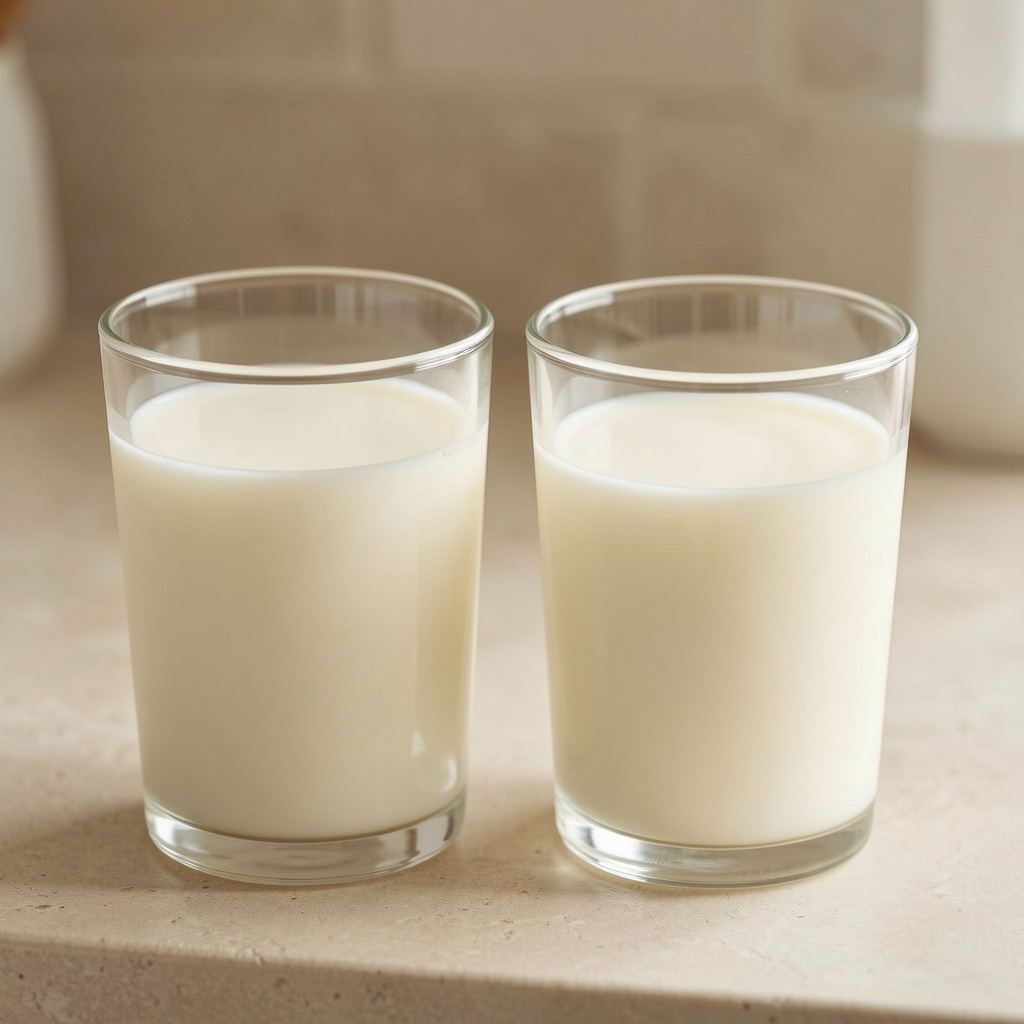
Low-fat milk is whole milk with some of the cream removed. Whole milk is about 3.25% fat. Low-fat (sometimes called 2%) drops to 2%. Skim is under 0.5%. Calories: a cup of whole milk is about 150, low-fat is 120, skim is 80. Protein and calcium stay roughly the same.
want the good stuff monthly?
one short email, no spam.
When you remove fat, you lose vitamins A and D, which are fat-soluble. That's why low-fat milk is fortified — they add the vitamins back. You also lose mouthfeel and satiety. Skim milk tastes like water with a milk idea in it. That's not a health problem, but it's why people drink more of it to feel satisfied, which kind of defeats the calorie savings.
What People Actually Ask
Is full-fat dairy bad for your heart? The current evidence says no. Multiple studies, including the August 2026 trial, show full-fat dairy doesn't worsen cardiovascular markers. The old "fat equals bad" logic was too simple.
Should I switch from low-fat to full-fat? If you prefer full-fat, there's no health reason not to. If you're counting calories, low-fat is still an easy swap. Pick based on your goals and taste, not on outdated fear of fat.
What's the dairy fat paradox? It's the term researchers use for the finding that full-fat dairy is neutral or protective, contrary to expectations. The paradox is that the thing everyone said would hurt you doesn't.
Is low-fat dairy still officially recommended? Some guidelines still say low-fat. But the scientific basis for that recommendation is thin, and it's getting thinner with each new study. CSPI is hedging. The experts who've actually looked at the data are backing off.
The Bottom Line
Eat dairy. Pick the version that fits your goals and your taste buds. Don't stress about the fat content — stress about whether you're eating real food or processed food. A cup of full-fat yogurt with berries is better than a low-fat yogurt loaded with added sugar every single time, and no study will change that.